

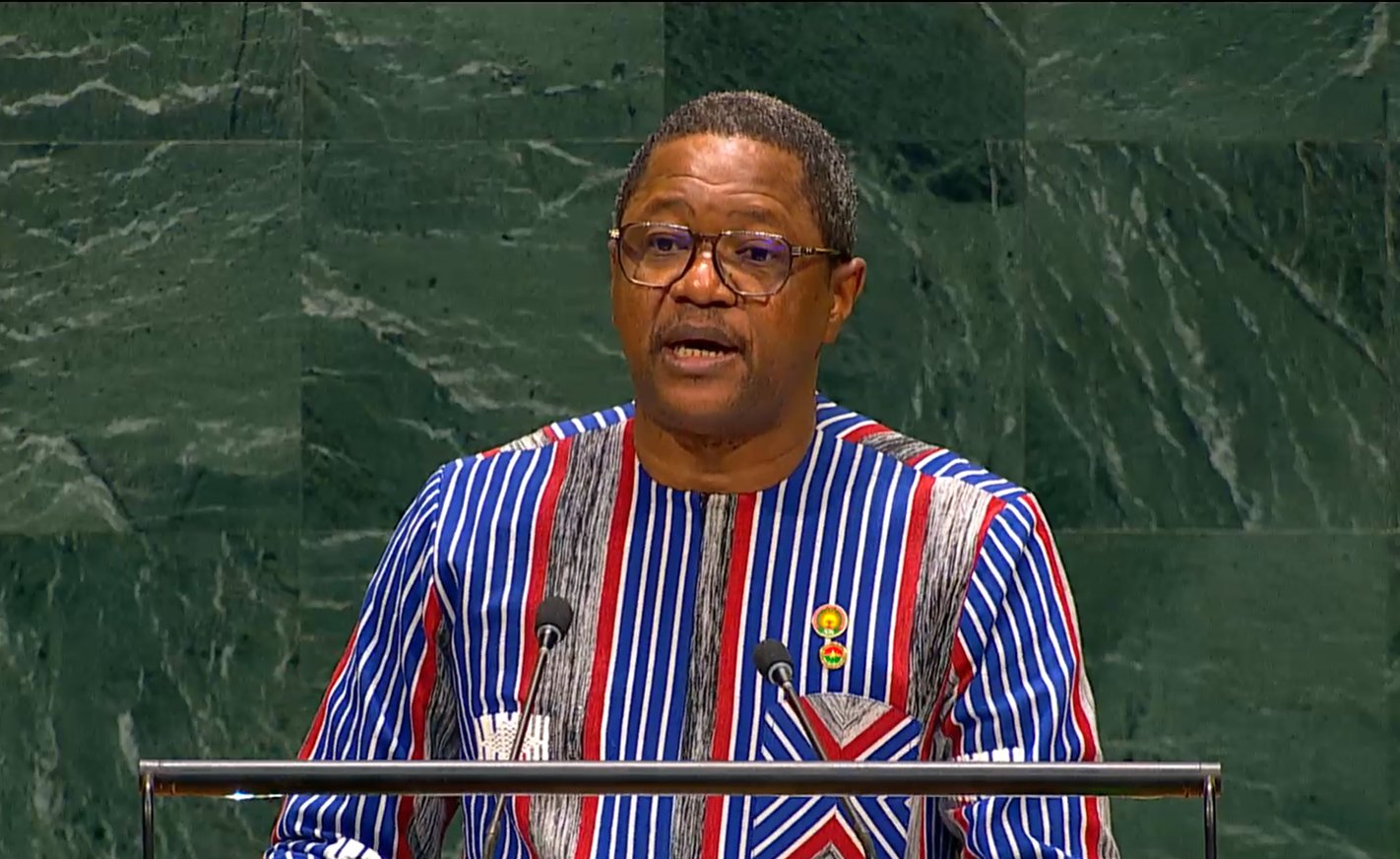
Karamoko Jean Marie Traoré, Minister for Foreign Affairs of Burkina Faso — who spoke for the Confederation of Sahel States (Burkina Faso, Mali and Niger) — stressed that, for more than a decade, violence has been sustained by criminal networks aiming to “subjugate the Sahel through fear”.
For its part, the Confederation rejects “wardship”, he said; rather, it seeks to escape a vicious cycle of exploitation brought on by neocolonialism. The Confederation’s motto — “one people, one space, one destiny” — represents the three Member States’ diplomatic cohesion, among other things, he said.
Observing that this year’s theme of “restoring trust” is an admission of its erosion between Member States due to double standards, biased positions and institutionalized injustice, he stressed: “Our Organization is no longer there for everyone, but belongs more to actors chosen according to their power and their vested interests.”
For the Confederation, rebuilding trust requires rejecting State-supported terrorism, which certain Powers employ as part of their foreign policy. Moreover, neocolonialism must end, he stressed, pointing to the European Parliament’s attempts to justify a possible offensive through its resolutions.
Spotlighting the importance of the rule of law, he said that the Confederation withdrew from the International Criminal Court because international law is currently being instrumentalized by certain actors. “The law of ‘might is right’ weakens the international order,” he stressed, also calling for Security Council reform in line with the Ezulwini Consensus.
Turning to domestic affairs, he spotlighted Burkina Faso’s deep transformation over the past four years, including economic developments relating to the processing of raw materials. “By exploiting and processing resources locally, Burkina Faso will create more value within our economy and ensure that the wealth of our country benefits the population directly,” he said.